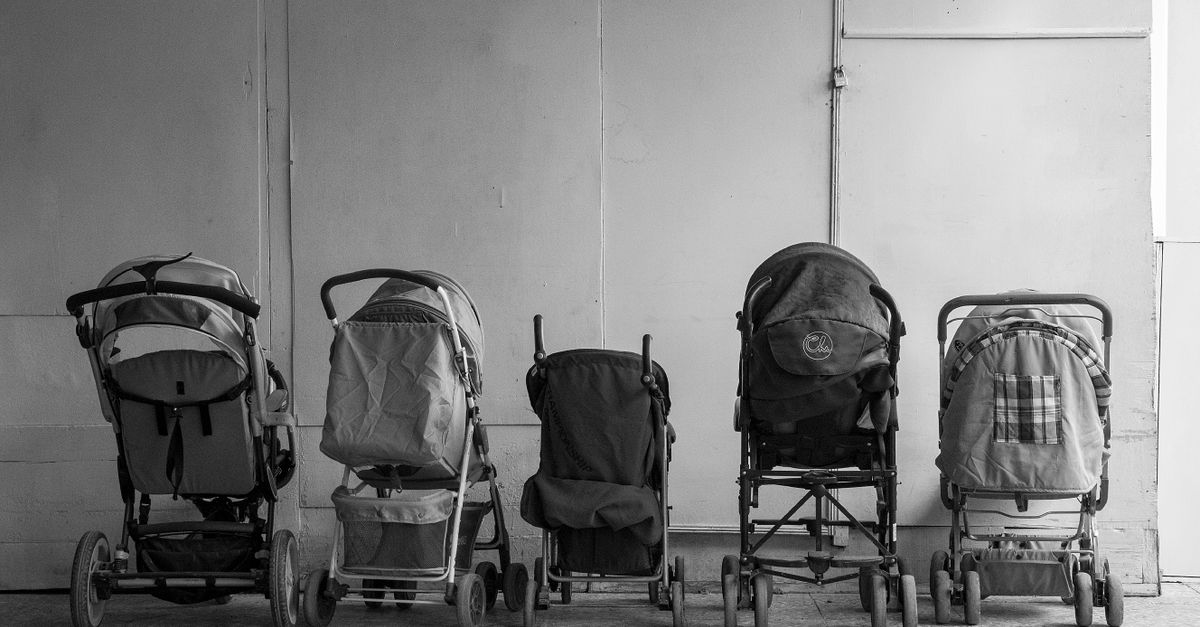
Strollers die in storage more often than they die in use. The failure modes are boringly consistent — damp concrete, temperature swings, mice, and grime left to set — and all of them are cheap to prevent. Here's how to store a stroller for a season in the garage, for years between kids, or in an apartment with no garage at all.
Garage storage: the default, done right
The garage is where most strollers live between uses, and it's a harsher environment than it looks:
- Get it off the concrete. Concrete floors wick and hold moisture, and a steel-framed stroller parked on damp concrete for a season grows rust at every fastener and spring. A rubber mat, a shelf, or a pallet is enough — anything that breaks the contact.
- Fold flat vs. standing: either is fine structurally — modern frames are designed to be stored folded. Standing on its wheels takes less floor thought; flat on a shelf keeps it out of the way. What matters is that nothing heavy gets stacked on it, which bends baskets and stresses the fold joints.
- Go vertical. The bike-storage aisle is secretly the stroller-storage aisle: heavy-duty wall hooks (rated 50+ lbs) hold a folded stroller by the frame, and ceiling pulley hoists made for bikes lift a full-size stroller clean out of the floor plan. Hook the frame, never the fabric or the handlebar adjustment.
- Cover it or strip it. An uncovered stroller in a garage collects dust, spider webs, and — worse — makes inviting mouse bedding out of the seat padding. Either remove the fabric and store it indoors, or cover the stroller with a large bag or sheet.
- Mind the temperature swings. An uninsulated garage cycling from freezing to baking is hard on foam-filled tires (they can crack or flat-spot) and makes plastics brittle over time. If your garage sees real extremes, the stroller would rather live in a closet.
Long-term storage between kids
Planning a gap of a year or more before the next baby? The storage decisions you make today decide whether you have a usable stroller later — or a moldy one worth nothing (see what clean used strollers are worth for the stakes; premium models hold 40–60% of retail).
- Clean it first, completely. This is non-negotiable: food residue and grime left on for a year set permanently and attract pests. Full walkthrough in the cleaning guide — and make sure the fabric is bone dry before it goes into storage, or you're sealing mold in with it.
- Original box, if you kept it, is genuinely the best container — it protects against dust and stacking damage, and it helps resale later. A large zip-up storage bag is the runner-up.
- Throw in silica gel packs (the big rechargeable ones are a few dollars) with the fabric and inside the box to keep humidity off metal and padding.
- Bag the small parts together. Car-seat adapters, the manual, rain cover, and cup holder go in one labeled zip bag taped inside the box. Future-you, or a future buyer, will be grateful — a complete set sells for meaningfully more.
- Store it indoors if you possibly can. A closet or under-stair space beats the garage, and the garage beats the attic (heat) and the shed (moisture, mice).
One caveat on the matching infant car seat: car seats expire, typically 6–10 years from manufacture, so check the date sticker before assuming it'll serve kid #2. Details in the travel system guide.
Apartment and small-space storage
No garage changes the math — now the stroller competes with you for living space:
- Compact-fold strollers earn their price here. A travel stroller like the BABYZEN YOYO or Cybex's compact models folds small enough for a coat closet shelf or under the bed — which is exactly why city parents pay the premium. If you're still choosing a stroller and storage is tight, weigh this heavily (our choosing guide covers the tradeoffs).
- An over-door or wall hook inside the entry closet holds a folded compact stroller off the floor.
- Full-size in an apartment: a corner of the entryway with a boot tray under the wheels (city wheels are filthy) is the honest answer. Wipe the wheels at the door and the rest of the home stays clean.
- Building stroller rooms: if your building has one, use a cable lock through the frame. Strollers do walk off, and a used premium stroller is a $400 item.
The quick pre-storage checklist
| Cleaned and fully dry | Prevents set-in stains, mold, pests |
| Off bare concrete | Prevents rust |
| Fabric covered or removed | Dust and mice |
| Silica packs added (long-term) | Humidity control |
| Accessories bagged with it | Resale value, sanity |
| Nothing stacked on top | Frame and basket damage |
If you're storing it because the kids have outgrown it for good, consider skipping storage entirely — a current-generation stroller is worth the most right now. Here's how to sell it, and where.